Center of Hope | Cape Verde
Our Story
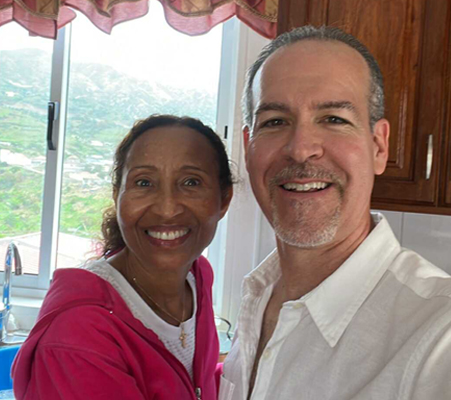
The vision and inspiration for this organization has foundations from Keith Kelble’s first visit to multiple islands of Cape Verde in 2009 with his wife Elce (aka “Cici”) who immigrated from Brava, Cape Verde to the United States in 1978. God placed love and compassion in his heart for Cape Verdeans and the country of Cape Verde that has inspired him to serve.
Together, Keith and Elce have sought to help Cape Verdeans with practical assistance, encouragement, and ministry and by sharing the gospel and God’s plan for salvation through Jesus Christ.
A Little About Cape Verde
Cape Verde is an island nation of roughly 500,000 people spread across nine inhabited islands in the central Atlantic Ocean. The archipelago was uninhabited until the 15th century, when Portuguese explorers established one of the first European settlements in the tropics. Over time, Cape Verde developed into a creole, mixed-heritage society, shaped by both West African and Portuguese roots.
Cape Verde remained a Portuguese colony until 1975, when it achieved independence and began building its own democratic institutions and infrastructure. Today, it is recognized as one of Africa’s most stable democracies.
Although Portuguese is the official language used in government and formal communication, most Cape Verdeans speak Cape Verdean Kriolu in daily life, with distinct dialects varying from island to island.
For more than two centuries, Cape Verde has maintained strong ties with the United States and Western Europe. Large Cape Verdean communities—often referred to as the diaspora or inmigrantes—live abroad, particularly in eastern Massachusetts, Rhode Island, and across Europe. In fact, the diaspora population is widely understood to be larger than the population living on the islands today.
Cape Verde is known for its warm hospitality known as “Morabeza”, rich cultural heritage, and friendly people all reflecting a deep sense of community and pride. We encourage you to explore more about this remarkable nation—online, and especially by visiting in person.